<?xml version="1.0" encoding="utf-8"?><feed xmlns="http://www.w3.org/2005/Atom" ><generator uri="https://jekyllrb.com/" version="4.4.1">Jekyll</generator><link href="https://bearandgiraffe.com/feed/community.xml" rel="self" type="application/atom+xml" /><link href="https://bearandgiraffe.com/" rel="alternate" type="text/html" /><updated>2026-11-21T19:39:02+00:00</updated><id>https://bearandgiraffe.com/feed/community.xml</id><title type="html">Bear &amp;amp; Giraffe | Community</title><subtitle>Fractional CTO and senior engineering leadership for startups. We architect scalable systems and take products from MVP to mature infrastructure.</subtitle><entry><title type="html">#DRAAAMS!</title><link href="https://bearandgiraffe.com/blog/draaams/" rel="alternate" type="text/html" title="#DRAAAMS!" /><published>2018-04-20T23:19:06+00:00</published><updated>2018-04-20T23:19:06+00:00</updated><id>https://bearandgiraffe.com/blog/draaams</id><content type="html" xml:base="https://bearandgiraffe.com/blog/draaams/"><![CDATA[<p>It is Friday evening, I just spent my entire afternoon on drama instead of being productive and working on billable stuff. Yet this time of drama is actually directly related to the work I do and why it really matters to me to be involved and help be part of a solution.</p>

<h2 id="context">Context</h2>

<p><a href="https://rubytogether.org">RubyTogether</a> is an organization that was created to help make sure that Ruby and all of the infrastructure that the Ruby community depends on can be sustained for a long time. We’ve got a <a href="/blog/the-cost-of-ruby/">post</a> that was published a while back on this blog that goes deeper in detail on what that means, I suggest you check that out before continue reading this.</p>

<p>When B&amp;G joined RT, it was primarily because of the mission behind the organization, but also because it had some legitimacy solely based on the people who were part of the board, which included Aaron Patterson and スティーブ クラブ肉 (Steve Klabnik). The only reason these names mattered is because there was no other metric available to judge the legitimacy of the organization and make sure it’s not someone’s ruse to scam people out of their money to fund their own work.</p>

<h2 id="the-trigger">The Trigger</h2>

<p>Speaking of someone funding their own work, a prominent member of the Ruby community came out with this blog post with a title that was bound to stir up some drama: <a href="https://samphippen.com/why-im-declining-funding-from-ruby-together/">Why I’m declining funding from Ruby Together</a>.</p>

<p><strong>Update [2018–04–22]:</strong> Sam announced on twitter in this <a href="https://twitter.com/samphippen/status/987843354011586560">tweet</a> that he has removed his original post in favor of the communication that is happening through other means. This is a good sign that things are progressing and the issues are being addressed.</p>

<p>In the blog post, Sam Phippen explains some of the issues that have been boiling up in recent months around the whole organization. One of the issues that Sam brings up is the possible conflict of interest surrounding the director of RubyTogether, André who is the main contributor to Bundler, and hence the main recipient of funds from RT.</p>

<p>Typical to how society functions today, a Twitter drama ensued. Many people chimed in with their own perspective. You can follow some of that in this Twitter Moment: <a href="https://twitter.com/i/moments/987413824931278852">https://twitter.com/i/moments/987413824931278852</a>, make sure to click on the tweets and read the threads, and not just what’s on the surface.</p>

<h2 id="next-steps">Next Steps</h2>

<p>I believe people like Sam and Aaron have valid concerns. I also believe André when he says he has tried to address those concerns. I understand why the initial step that was taken was done in secret, but I do also think that it’s time this gets dealt with in a transparent way.</p>

<p>The reason why we need transparency is in the nature of the organization itself. It’s a non-profit organization that is funded by membership dues. The board is elected by the members and it’s their right to know who they are putting in charge of the organization. In addition to that, the organization is meant to serve an open source community and takes actions that affect the entire community and not just the paying members.</p>

<p>Most importantly though, the key to success moving forward is having a willingness to communicate with one another in a respectful and open minded way. Something I believe both parties have failed at in this situation. Letters that look and feel like something a lawyer would send are bound to have an adverse reaction to them. On the other hand, blocking people on Twitter is not conducive to keeping a communication channel open. But that’s in the past, the question is can we hit a reset button and start again a conversation that is amicable and positive? Can both sides agree that we’re all working for the same goals, we all believe in the same mission and want RT to succeed, therefore should try to prioritize that over any personal feelings?</p>

<p><strong>My 2 cents:</strong> for RT to succeed we need to find people who are not as invested in the personal aspect of this conversation to lead and mediate the conversation. Maybe even lead RT altogether. It might sound weird. How can someone who isn’t invested care enough about the success of RT? Easily. I, as an example and I’m sure there are many like me out there, have no flesh in the game because I choose NOT to contribute to any of the open source projects that RT would fund, BUT I have a very deep interest to make sure those projects succeed because I depend on them for my work, therefore I have as much interest as anyone in making sure RT is successful without the conflict of being the recipient of the money that RT contributes to the open source community. So is there someone who isn’t DHH, Aaron, André, Sam, or any one of the major contributors but that still has the same interest in seeing RT succeed, that can (and wants to) lead the organization? I believe that will be the key moving forward.</p>

<p>What’s your sense of all of this? How would you resolve this situation?</p>]]></content><author><name></name></author><category term="community" /><category term="open-source" /><category term="ruby" /><summary type="html"><![CDATA[It is Friday evening, I just spent my entire afternoon on drama instead of being productive and working on billable stuff. Yet this time of drama is…]]></summary></entry><entry><title type="html">Days of Code</title><link href="https://bearandgiraffe.com/blog/days-of-code/" rel="alternate" type="text/html" title="Days of Code" /><published>2018-02-05T17:01:01+00:00</published><updated>2018-02-05T17:01:01+00:00</updated><id>https://bearandgiraffe.com/blog/days-of-code</id><content type="html" xml:base="https://bearandgiraffe.com/blog/days-of-code/"><![CDATA[<figure>
  <img src="/assets/images/blog/days-of-code/1.jpg" alt="" width="1920" height="1281" loading="lazy" />
</figure>

<p>If you’ve been following us for a while, you probably know that we like to participate in local events that promote STEM and access to STEM for everyone.</p>

<p>In December of 2017 we sponsored and volunteered as mentors for ChickTech Austin:</p>

<p><a class="link-card" href="http://www.kvue.com/news/local/chicktech-austin-trying-to-get-more-girls-in-tech/498474106">
  <span class="link-card__title">ChickTech Austin trying to get more girls in tech</span>
  <span class="link-card__description">AUSTIN - While more women are entering the workplace, the tech industry has continued to be mostly male dominated. A…</span>
</a></p>

<p>And in February of 2018 we will be helping out with <a href="http://daysofcode.io">Days of Code</a> Austin.</p>

<p>Days of Code is Austin’s first tuition-free programming bootcamp launching in 2018. Our goal is to help people get a great job in tech!</p>

<p>There will be two events: 10 and 100 Days of Code. 10 Days is a great way to kick-start your learning (some people even land a job after this short event!). The 100 day event helps you dive down into technology — you will gain enough skills for an entry level position as either a front-end developer, back-end developer or a data scientist.</p>

<p>Days of Code is free because the mentors are volunteers that give an hour of their time per day to sit with each student (15 minutes per student) and help them get unblocked, keep them focused on the big picture, and guide them to learn how to problem solve independently using all of the free online tools.</p>

<p>While Days of Code aims to be self sustainable, the fact that the tuition is free is a key factor. It is one of the main ways a bootcamp like this can be possible for under represented groups in tech.</p>

<p>According to studies [<a href="https://www.coursereport.com/reports/coding-bootcamp-job-placement-2017">1</a> and <a href="https://www.coursereport.com/blog/data-dive-gender-in-coding-bootcamps">2</a>] by <a href="https://www.coursereport.com">Course Report</a>, dev bootcamps graduates were 40% female in 2017 compared to only 17.9% of undergraduate computer science degrees being awarded to females. That is a great stat in favor of bootcamps, but there’s more. The same studies site that:</p>

<blockquote>
  <p>the typical bootcamper is 29 years old, has 6 years of work experience, has at least a Bachelor’s degree</p>
</blockquote>

<p>while also stating that at least 20% of the students use an external loan to pay for the tuition. Another stat from the same studies shows that only 1% of bootcampers were a homemaker/”stay at home” parent before joining the bootcamp, 8% employed part time, and 17% unemployed. What these stats tell us is that in order to be able to make a career change into tech, you need to have saved up enough to pay for the tuition, or apply for a loan. Only a small percentage are able to make this transition without the financial means necessary to invest in this important step.</p>

<p>This puts the onus on the individual and keeps the option out of reach for many under represented groups. Especially since all bootcamps (Days of Code included) require the individual to quit their job and focus completely on the learning process during the bootcamp. And here’s where Days of Code is different.</p>

<p>At Days of Code we believe that the onus should be on the companies to invest in the workforce they need to create their products that make them tons of money, and not on the individual who is trying to learn the skills needed to get a job in the current economy. With 10 Days of Code, the individual is able to use any accumulated PTO (most would only need 5 days off since the rest are on a weekend) to have a trial run and determine whether coding is for them and something they would want to make a larger investment in and join the 100 days program. And that is the only investment the students would need to make, the time investment in themselves, while everything else is provided at no cost to them.</p>

<p>What Days of Code is doing isn’t new. The story of Gail Evans, highlighted in <a href="https://www.nytimes.com/2017/09/03/upshot/to-understand-rising-inequality-consider-the-janitors-at-two-top-companies-then-and-now.html">this New York Times article</a>, shows that when companies invest in their own workforce, like Kodak did for Ms Evans, their investment is then rewarded when those they uplift help lead them to more success.</p>

<p>If you are a company looking to hire devs to help grow your product, consider partnering with Days of Code to help produce your next workforce. At B&amp;G, we are partnering with Days of Code to help mentor students during the program, but we also provide mentoring services for companies who want to hire bootcamp graduates but do not have the internal resources to support such a hire. You can find our <a href="/blog/b-gs-mentorship-framework/">mentorship services</a> and other offerings on our <a href="/#services">website</a>.</p>]]></content><author><name></name></author><category term="community" /><category term="learning-to-code" /><category term="austin" /><summary type="html"><![CDATA[If you’ve been following us for a while, you probably know that we like to participate in local events that promote STEM and access to STEM for everyone.]]></summary><media:thumbnail xmlns:media="http://search.yahoo.com/mrss/" url="https://bearandgiraffe.com/assets/images/blog/days-of-code/1.jpg" /><media:content medium="image" url="https://bearandgiraffe.com/assets/images/blog/days-of-code/1.jpg" xmlns:media="http://search.yahoo.com/mrss/" /></entry><entry><title type="html">The Austin Ruby Community</title><link href="https://bearandgiraffe.com/blog/the-austin-ruby-community/" rel="alternate" type="text/html" title="The Austin Ruby Community" /><published>2017-08-09T16:01:02+00:00</published><updated>2017-08-09T16:01:02+00:00</updated><id>https://bearandgiraffe.com/blog/the-austin-ruby-community</id><content type="html" xml:base="https://bearandgiraffe.com/blog/the-austin-ruby-community/"><![CDATA[<figure>
  <img src="/assets/images/blog/the-austin-ruby-community/1.png" alt="" width="2286" height="992" loading="lazy" />
</figure>

<p>B&amp;G recently celebrated its 2nd year in existence, and its second year in #Austin. The company officially was formed the day I landed in Austin in 2015. It feels like I’ve always been here though, and one aspect behind that is the Ruby community in Austin that has taken me in.</p>

<p>Within a few days of being in Austin, <a href="https://twitter.com/avdi">Avdi Grimm</a>, whom I’ve known from my days in VA, tweeted about LoneStarRuby that was happening in Austin few days after I had seen the tweet. So I immediately signed up. When there I tried to introduce myself to as many people as I could, and people were receptive, welcoming, and nice. A couple of people there mentioned <a href="http://www.austinonrails.org">Austin on Rails</a> so I looked it up and made an effort to attend. I learned from the website that it’s one of the original meetups about Ruby on Rails in the country, so it was a bit overwhelming to go there and be around people who’ve been working in this field for so long. All of the angst went away though within minutes of being there. The community was very welcoming and there was free delicious 🍕, so what could go wrong, right?</p>

<p>I tried to make going to the meetup a habit. Once I establish a habit, and get into a routine, I am more likely to persist doing it, whereas when I don’t I tend to find excuses to not do it. After going on a regular basis and having it set on my schedule, it became part of my life.</p>

<p>At that point I made the decision to make an effort to go to other meetups. At LoneStarRuby I had met <a href="https://twitter.com/rubygeek">Nola Stowe</a>, who runs the <a href="https://www.meetup.com/austinrb/">Austin.rb meetup</a>. Nola also was a regular at Austin on Rails, and each time she would mention to me that I should come to her meetup my response was that I will the coming month. At first I would always miss it for one reason or another, but I decided in 2016 that I would make an effort to make it to Austin.rb just the way I was going to Austin on Rails. And I did.</p>

<p>You’re probably asking yourself why there are 2 Ruby meetups in Austin. The answer is simple, the community needed it and wanted it. Different people show up to each one of them, with some crossover at times. The topics discussed in one are different than the other. And for me, it’s an extra day in the month that I get to be inspired by others.</p>

<p>The Ruby community in Austin is awesome, and it’s led by people who’ve been working in the community for many years. So imagine my surprise when I was asked to join the Austin on Rails organizing team. That was an honor that I wouldn’t pass on. So I now help organize AoR, as of the beginning of 2017. Then, a few months later, Nola mentioned to me her desirer to “retire” from organizing Austin.rb. With AoR, we have a team that shares the responsibility, whereas Nola has been taking on the organization of Austin.rb by herself, and that can take a toll on someone. So I could completely understand why it wasn’t something she wanted to continue. So when she first approached me, the options were to either retire the group entirely, or find someone else to take on the work. I did not want the group to stop, so I volunteered to take on the organizing role. And at this month’s meeting, it was made official, it was Nola’s last time as organizer.</p>

<p>The Austin Ruby community has been kind to me, and I only hope that I am able to continue the legacy that’s been established by others before me. On the flip side, I believe the community belongs to its members and not solely those who organize the meetups. So if you are a member of the Ruby community in Austin I want to thank you first, and also encourage you to reach out with any suggestions, comments, concerns, etc you might have. The community belongs to you and it is what you make out of it. So I hope to see you at the next meetup!</p>]]></content><author><name></name></author><category term="community" /><category term="ruby" /><category term="austin" /><category term="community" /><category term="rails" /><summary type="html"><![CDATA[B&G recently celebrated its 2nd year in existence, and its second year in #Austin. The company officially was formed the day I landed in Austin in 2015…]]></summary><media:thumbnail xmlns:media="http://search.yahoo.com/mrss/" url="https://bearandgiraffe.com/assets/images/blog/the-austin-ruby-community/1.png" /><media:content medium="image" url="https://bearandgiraffe.com/assets/images/blog/the-austin-ruby-community/1.png" xmlns:media="http://search.yahoo.com/mrss/" /></entry><entry><title type="html">ATX Hack 4 Change 2017</title><link href="https://bearandgiraffe.com/blog/atx-hack-4-change-2017/" rel="alternate" type="text/html" title="ATX Hack 4 Change 2017" /><published>2017-06-19T16:01:01+00:00</published><updated>2017-06-19T16:01:01+00:00</updated><id>https://bearandgiraffe.com/blog/atx-hack-4-change-2017</id><content type="html" xml:base="https://bearandgiraffe.com/blog/atx-hack-4-change-2017/"><![CDATA[<figure>
  <img src="/assets/images/blog/atx-hack-4-change-2017/1.png" alt="ATX Hack 4 Change (source: http://atxhackforchange.org)" width="1906" height="1794" loading="lazy" />
  <figcaption>ATX Hack 4 Change (source: <a href="http://atxhackforchange.org">http://atxhackforchange.org</a>)</figcaption>
</figure>

<p>I mentioned in the <a href="/blog/the-lesson-from-ignoring-all-lessons/">previous post</a> that I participated in the <a href="http://atxhackforchange.org">#ATXHack4Change</a> event that happened on the weekend of June 2nd. So here’s my quick rundown of the event and what I thought of it.</p>

<p>First, let’s go over the scheduled events. On the Friday of that weekend, there was a launch event that started at 6PM, the purpose of the event was to get people to mingle and meet the “Project Champions” who will be pitching the next morning, as an opportunity for those with the ideas to meet those with the skills they need and partner up. On Saturday morning, the Project Champions had 1 minute each to pitch their idea. After the pitches was the time where the teams were to be formed and each team would move to their allocated work space (this part of the event was hosted at St. Edwards University, and each 2 teams were allocated a classroom or a room in the library). That’s when the work begins. Breakfast, lunch and dinner were provided, as well as snacks in between. The event was set to “end” at 10PM on Saturday and then resume back up at 7AM on Sunday. Sunday’s schedule was simple, you go to your team’s workplace and hack until it was time to demo. Demo testing was 2:30PM (hook your laptop to the projector and make sure it works), hands off keyboards was at 3PM, and demos at 3:30PM. Breakfast and lunch were provided, a snack in between too, dinner was not.</p>

<p>Next let’s take a look at each aspect of the hackathon, starting by the most important part for me, the food ;)</p>

<h2 id="food">Food</h2>

<h3 id="launch-event">Launch Event</h3>

<p>The launch event was hosted in a separate place than the rest of the event, and had catered food. It was at best a “meh”, which is falls right under the expectations of any attempt to try to serve international street food in an Americanized fancy way. Pani pury with salmon mousse filling? Really? Really? I saw at least one person throw away a plate of food, and considering that the event was a 6PM on a Friday, and how everyone must have been starving, that gives you an indication of how untasty it was. I stopped by 7/11 on my way back home and got a beef jerky, which I never eat, to make up for what was served. That should give you an indication of how bad it was.</p>

<h3 id="breakfast">Breakfast</h3>

<p>Breakfast is the first experience you have at an event usually. It’s the event’s first impression, especially for those who skipped the launch party the night before. It sets the tone. Donut balls from Dunkin Donuts is not a good start, especially in the breakfast taco capital of the world! Big fail there, especially with no plates provided so you had to grab a bunch (who’s eating just 1 donut ball?) with your hands and then you had sticky hands to greet people as they came in.</p>

<h3 id="lunch">Lunch</h3>

<p>Lunch was okay. The first day they had burritos and mini sandwiches. I’m a big fan of burritos, so that makes up for any other lacking features of that lunch. The second day it was just the mini sandwiches, so that was a bummer. I think the organizers thought that the sugar from the donuts and carbs from the sandwiches was a good idea to give the hackers some energy, except they got it backwards, this kind of energy causes people to crash, and I could see it with one of my teammates who had to get 2 red bulls after lunch to stay awake.</p>

<h3 id="dinner">Dinner</h3>

<p>I didn’t stick around for dinner on Saturday, do you blame me after the initial experience? So I have no idea what was provided then. Dinner was not served on Sunday, which I think was a horrible idea given how the event ended (more on that in a bit).</p>

<h3 id="snacks">Snacks</h3>

<p>Snacks were the best part of the weekend for me. There were a lot of Kind bars being given away, I pretty much substituted a meal for like 10 of those bars. And the sweetest of them all (pun intended) were the warm cookies delivered by <a href="https://www.cookiedelivery.com">Tiff’s Treats</a> (yum!).</p>

<h2 id="communication">Communication</h2>

<p>Part of having a successful event, regardless of the type (meeting, hackathon, etc) is setting the proper expectations. The key to setting expectations is proper communication. This is where I always wonder what other people’s experience was and how much informed they felt they were. With an event like this, you’ve got different involvement levels, Project Champions are involved in a different way than everyone else, but also people who signed up to join a couple of days before the event might have less insight than those who signed up a month prior.</p>

<p>I, personally, was a last minute sign up. I registered on Thursday (I believe) right before the event. I showed up not knowing much about it or what to expect, so I had a completely blank slate. So I expected an intro during the launch event. That’s when you want to set the expectation, so going through the schedule and everything that is planned would have been a huge step towards a great start. Unfortunately, the launch party was more focused about having the mayor, an ex Mint engineer, someone from Google Fiber, Microsoft, etc speak and taking pictures with them than anything else. I get it, you want press and recognition, but still…</p>

<p>On Saturday, before the pitches started, would have been another ideal moment to set the expectation, but it didn’t happen then either. They just talked about the logistics of the pitch (enter stage left, exit right, red flag means time is up). Then after the pitches were over, the organizers dispersed the crowd to the work spaces, and mentioned something about a volunteer helping people setup Slack if they wanted help with it. There’s a Slack channel? Really? When was I supposed to find out about it? Where was my invite? And that’s when it became clear that some people had received invites to Slack, others not. And those who joined were receiving information that the rest of us weren’t. Damn!</p>

<p>So after requesting an invite be sent to me, I proceeded to mute the damn Slack channel because there was over 200 people talking and it was just noise. I would have spent the entire weekend reading the messages coming through Slack and not have done anything else, so I decided to ignore it. So much for that!</p>

<h2 id="projects-andtime">Projects and Time</h2>

<p>There were about 53 projects (depends on who actually showed up on the day of), you can see the full list here: <a href="https://stedwards.app.box.com/v/ATXH4CProjects2017">https://stedwards.app.box.com/v/ATXH4CProjects2017</a>.</p>

<p>Let’s put that in perspective. 50+ projects. 1 minute pitches. That’s 1 hour of pitches (+/- 10 minutes with the transitions in between and those went over a bit). That’s a lot of ideas to keep track of and figure out which team you want to be a part of. After the pitches, there was some scrambling of trying to find the Project Champion you wanted to work with, where their workplace was located. But of course nothing works as expected, my team and a few others, were supposed to be in certain rooms that were not marked, so we spent a bunch of time going up and down a building to try to find it (rooms 1–9 were properly labeled, 10–15 not), and then more time to wait for a volunteer to come and resolve the situation. So hacking didn’t start till about 10AM.</p>

<p>Now of course you’ve got people from different backgrounds that want to join the same team and work on it. With software development, you’ve got your PHP dev, Ruby dev, React dev, etc. And good luck finding a group that understand that same stack. But that’s a problem for all hackathons, not just this one.</p>

<p>There was a cut-off on the first day set to 10PM, which I thought was interesting. I don’t expect hackathons to limit the amount of time teams put in between the start and finish. A couple of people stayed late, but still ended up leaving and coming back the next day. In a hackathon, you’ve got such a limited amount of time to begin with, you barely have time to implement a fraction of what you set out to do. So to limit that even further was kind of interesting. ¯\_(ツ)_/¯</p>

<p>The most intriguing part to me was that the hacking was set to finish at 3PM on Sunday. That’s early! 10AM to 10PM on Saturday and 7AM to 3PM on Sunday barely give you 20 hours and that’s without excluding the time for meals, etc.</p>

<p>Which brings us to the demos. Remember the number 50+ projects. 2 minute demos. Ideally about 2 hours of demoing. In reality it was more like 2 and half hours of boredom and anxiety. It didn’t help that my team was about 42nd in the order, so that was a loooooooooong time to wait.</p>

<p>And that leads to the most important element of the whole event, the projects. 50 is a lot of projects. 50 with a big chunk of them being worthless is a miserable experience and torture. You might think that “worthless” is harsh and subjective, but if you happen to see me one day, ask me why I said that and I’m certain you’d agree. I won’t get into details here because I don’t want to name and shame, that’s not what this is about. There were a bunch of projects that had nothing to do with change, and would be an insult to categorize under one of the “U.N. GLOBAL GOALS INITIATIVE” goals. In fact, there were at least a couple that were straight up people looking for free labor to work on their not so interesting ideas. Let alone the couple of projects that were the exact same idea but yet did not merge into one team (wtf!). With 50+ ideas, there was not a shortage of potential interesting ones, yet to have the entire group of participants sit through every single one of them is not a good use of time. Some curating would have gone a long way.</p>

<h2 id="judging">Judging</h2>

<p>This part is one of the most controversial part in every event that has judging in it. It’s never transparent as to what criteria were used to qualify one project better than the other. The website may have a section on how projects are judged:</p>

<blockquote>
  <p>Our projects are judged equally on:</p>
</blockquote>

<blockquote>
  <p>1) Execution <br />
2) Practicality</p>
</blockquote>

<blockquote>
  <p>We want you to be creative, but we want our projects to have a real-world impact. Other criteria we take into consideration are the civic need, accessibility, sustainability, and originality of the project. Social progress is almost never expeditious, but we look forward to seeing which Austin issues will be “Most Hacked Forward” at ATX Hack for Change 2017.</p>
</blockquote>

<p>but that never means that in practice these guidelines were followed. Especially since some of these projects could have been something people have been working on for months or years, whereas others were completely done within the time frame of the hackathon. I never participate in these kinds of events because of the judging or the awards (there were none in this one), I participate because of the experience. I always expect this part of it to not be satisfactory, and this event was no different than any other.</p>

<h2 id="conclusion">Conclusion</h2>

<p>All that being said, where do I stand with regards to ATX Hack 4 Change? Simply put, I had high expectation for an event in its 5th year running, I was disappointed by the organization aspect of it but I enjoyed the experience. Organizing such events is not easy, I grant you that, but many things could have been tightened up, so I hope these things get addressed in the future.</p>

<p>To me, the most important part was to be involved in the local community, and this event provides the opportunity to do just that. I hope next year’s ideas are more inspired and grand than this year’s, but I enjoyed being part of it and meeting new people.</p>

<p>Until next year :)</p>]]></content><author><name></name></author><category term="community" /><category term="community" /><category term="austin" /><summary type="html"><![CDATA[I mentioned in the previous post that I participated in the #ATXHack4Change event that happened on the weekend of June 2nd. So here’s my quick rundown of…]]></summary><media:thumbnail xmlns:media="http://search.yahoo.com/mrss/" url="https://bearandgiraffe.com/assets/images/blog/atx-hack-4-change-2017/1.png" /><media:content medium="image" url="https://bearandgiraffe.com/assets/images/blog/atx-hack-4-change-2017/1.png" xmlns:media="http://search.yahoo.com/mrss/" /></entry><entry><title type="html">Meet Veronica, From the Better Beehive Project</title><link href="https://bearandgiraffe.com/blog/meet-veronica-from-the-better-beehive-project/" rel="alternate" type="text/html" title="Meet Veronica, From the Better Beehive Project" /><published>2017-04-03T22:52:42+00:00</published><updated>2017-04-03T22:52:42+00:00</updated><id>https://bearandgiraffe.com/blog/meet-veronica-from-the-better-beehive-project</id><content type="html" xml:base="https://bearandgiraffe.com/blog/meet-veronica-from-the-better-beehive-project/"><![CDATA[<figure>
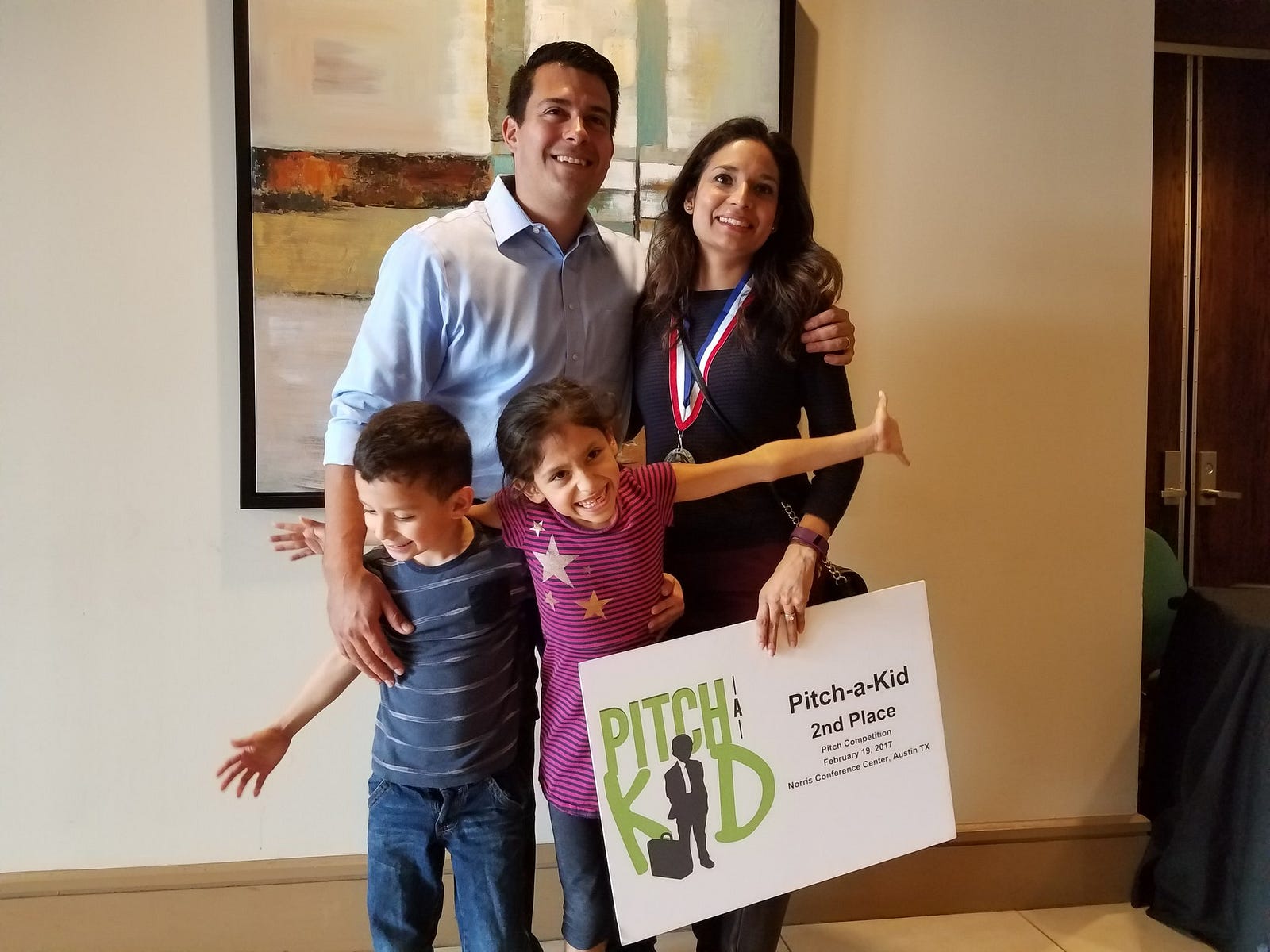
  <img src="/assets/images/blog/meet-veronica-from-the-better-beehive-project/1.jpg" alt="Veronica and the family" width="2048" height="1536" loading="lazy" />
  <figcaption>Veronica and the family</figcaption>
</figure>

<p><em>I want to build B&amp;G as a platform for women entrepreneurs and women in tech. One way we do this is by providing a platform to amplify the voice of women, and boy I’ve got a story for you today.</em></p>

<p>Meet <a href="https://twitter.com/BetterBeehive">Veronica</a>. Veronica is a woman (d’oh). Veronica is a wife. A Mother. A daughter. A sister. And many other things which none singularly define her yet are all part of the whole person she is. Yet, those characteristics are an integral part of why Veronica is an entrepreneur.</p>

<p>Veronica is the driving force behind a new initiative in Austin called <a href="http://www.betterbeehiveproject.com">Better Beehive Project</a>, which aims to empower individuals and families of individuals who do not fit the normative mold of physical and mental capacities, in other words differently abled individuals. I believe this is a great mission, we all need someone to be a champion for our voices, and Better Beehive Project is exactly that for a segment of the community that is often neglected by businesses.</p>

<figure>
  <img src="/assets/images/blog/meet-veronica-from-the-better-beehive-project/2.png" alt="Like the place? Give it a buzz! Needs a improvements? Leave a sting!" width="500" height="284" loading="lazy" />
  <figcaption>Like the place? Give it a buzz! Needs a improvements? Leave a sting!</figcaption>
</figure>

<p>The idea itself is quite simple, if you frequent a business (eg. a restaurant) and notice that its friendly to people with different needs you would want to recommend it (by submitting a “buzz”) so that others are encourage to become patrons. On the other hand, if the business cannot serve the needs of the person, BBP can provide a way to let that business know what adjustments can be made to ensure a friendlier atmosphere (by submitting a “sting”).</p>

<p>I can talk about Veronica, her contagious passion, and the great work she is doing as an entrepreneur, but it wouldn’t be a complete tail without mentioning the story within the story, as is typical with the experience of women in general and especially female entrepreneurs who are also mothers. For this part, I will let Veronica tell the story in her own words:</p>

<blockquote class="pullquote">
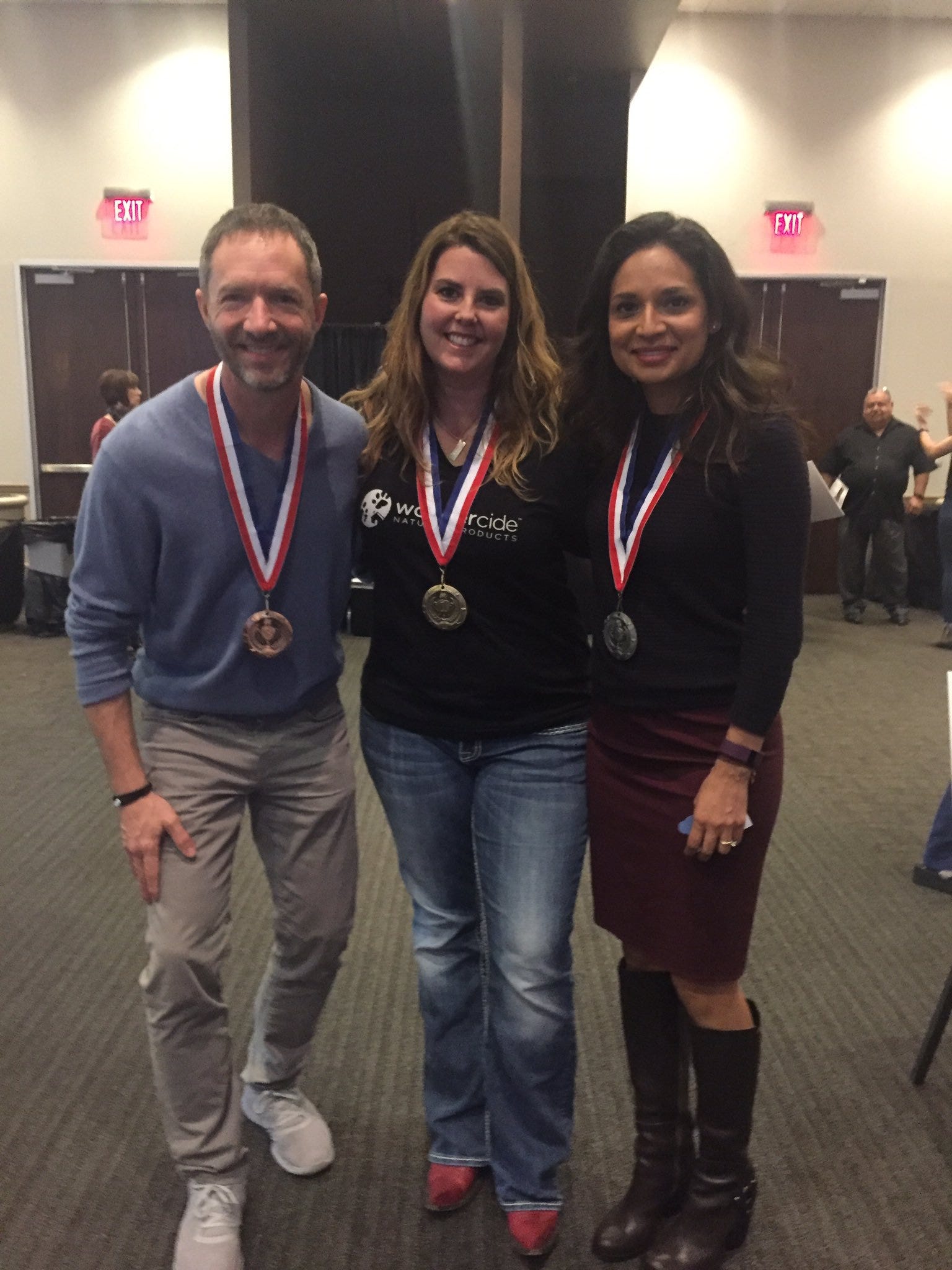
  <p>Pitch a Kid was an amazing experience. My first official pitch and I was very nervous, my entire family came to cheer me on!! I was the first company to go up and pitch to a group of kids and then they had the opportunity to ask me questions about my business. During intermissions I had the opportunity to meet and network with the other companies that were pitching. I had the pleasure to meet Stephanie Boone, Founder and CEO of Wondercide. In doing research on my competition for Pitch A Kid I was so impressed with her story and that she had competed and won on Shark Tank!! I was even more excited to meet her and when she told me she was impressed with Better Beehive Project and inspired by our mission I was elated. I won second place behind Stephanie at Pitch a Kid and was grateful for the experience. Imagine my surprise when a week later, Mike Millard Founder of Pitch A Kid told me that Stephanie had donated her prizes to Better Beehive Project. Her prizes included a guaranteed meeting with a Venture Capitalist and I chose Kerry Rupp with True Wealth Ventures. […] She is part of a woman owned group that invests in women founders. I also won other prizes such as a virtual assistant and seed investor management system.</p>
</blockquote>

<figure>
  <img src="/assets/images/blog/meet-veronica-from-the-better-beehive-project/3.jpg" alt="Winners of Pitch A Kid with Veronica on the right and Stephanie in the middle." width="1536" height="2048" loading="lazy" />
  <figcaption>Winners of Pitch A Kid with Veronica on the right and Stephanie in the middle.</figcaption>
</figure>

<p>Goosebumps much? Here are two entrepreneurs, in a very highly competitive environment (or so we are led to believe the startup world is), both able to admire each other’s accomplishments, and where one of them let go of valuable resources for her success and the success of her startup for the benefit of the other. If that is not worthy of being on every newspaper’s front page, and every startup/tech related blog in Austin, I don’t know what is! Which is why I want to take this opportunity to give a shout out to Mike Millard and Audrey Millard from <a href="http://www.pitchakid.com/">Pitch A Kid</a> and <a href="https://twitter.com/sbooneatx">Stephanie Boone</a> from <a href="http://www.wondercide.com/">Wondercide</a> for setting a positive example of what the #Austin startup culture is like.</p>

<figure>
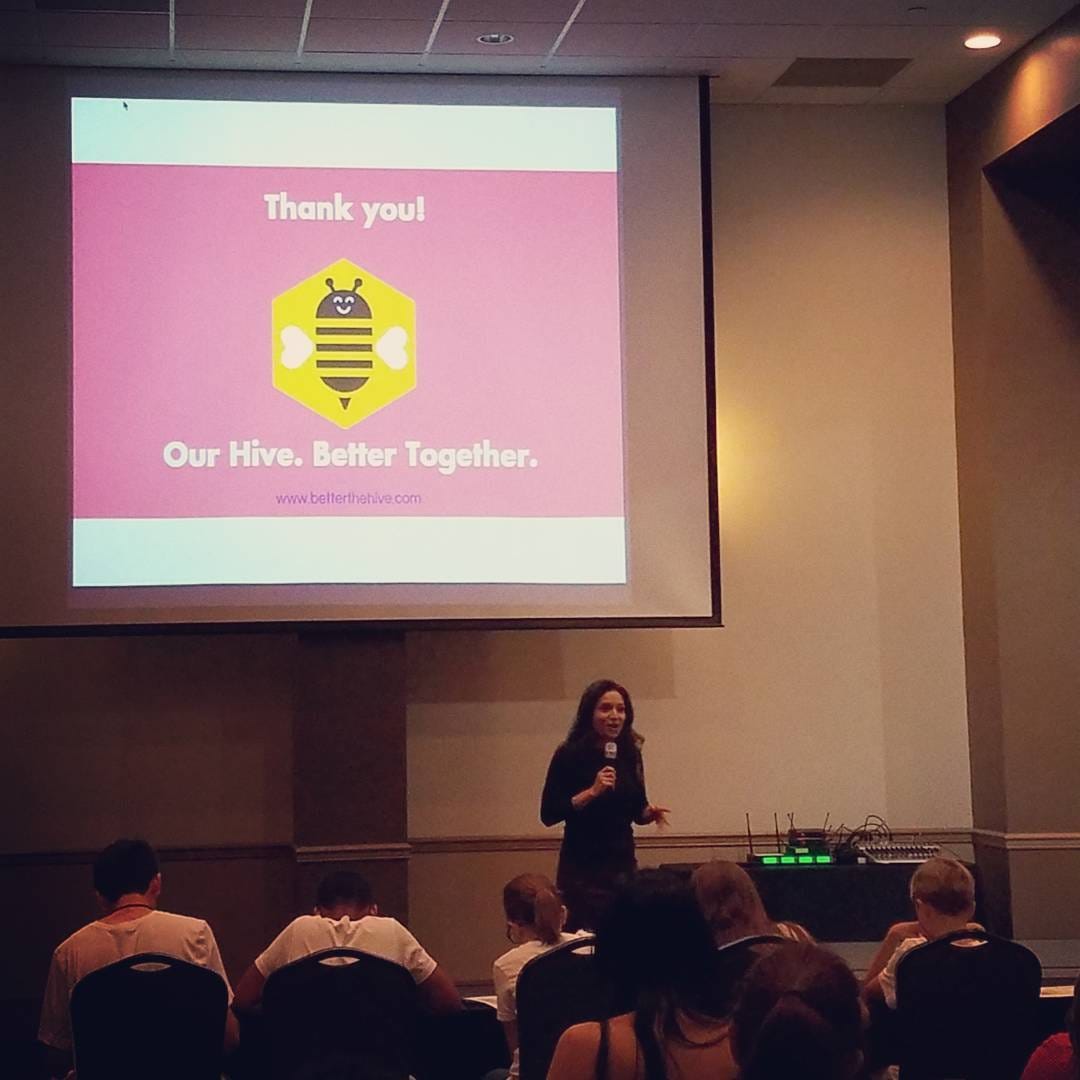
  <img src="/assets/images/blog/meet-veronica-from-the-better-beehive-project/4.jpg" alt="Thank you!" width="1080" height="1080" loading="lazy" />
  <figcaption>Thank you!</figcaption>
</figure>

<p>With that I will leave you with these words from Veronica:</p>

<blockquote class="pullquote">
  <p>I am a non-technical founder with a strong drive and passion for changing the way our society interacts with individuals with special needs. I am a mother of two children, one with Autism and the other with severe food allergies, I have also worked as a parent liaison for Travis County in Children’s Mental Health and parent empowerment. In my journey transitioning of being a founder, Austin and our driver for diversity has embraced me and my idea and I think this is a perfect example of our startup culture!!</p>
</blockquote>

<figure>
  <img src="/assets/images/blog/meet-veronica-from-the-better-beehive-project/5.png" alt="" width="197" height="197" loading="lazy" />
</figure>]]></content><author><name></name></author><category term="community" /><category term="entrepreneurship" /><category term="women-in-tech" /><summary type="html"><![CDATA[I want to build B&G as a platform for women entrepreneurs and women in tech. One way we do this is by providing a platform to amplify the voice of women…]]></summary><media:thumbnail xmlns:media="http://search.yahoo.com/mrss/" url="https://bearandgiraffe.com/assets/images/blog/meet-veronica-from-the-better-beehive-project/1.jpg" /><media:content medium="image" url="https://bearandgiraffe.com/assets/images/blog/meet-veronica-from-the-better-beehive-project/1.jpg" xmlns:media="http://search.yahoo.com/mrss/" /></entry><entry><title type="html">The Cost of Ruby</title><link href="https://bearandgiraffe.com/blog/the-cost-of-ruby/" rel="alternate" type="text/html" title="The Cost of Ruby" /><published>2017-03-06T16:02:00+00:00</published><updated>2017-03-06T16:02:00+00:00</updated><id>https://bearandgiraffe.com/blog/the-cost-of-ruby</id><content type="html" xml:base="https://bearandgiraffe.com/blog/the-cost-of-ruby/"><![CDATA[<p>If you work in software development in 2017, you’re most likely using OSS (Open Source Software), or you are dependent on the services of other companies who use OSS. There is no way around it. The question that begs itself then is whether you know what the cost of the OSS you’ve built a business on is?</p>

<blockquote>
  <p>But isn’t OSS free you ask?</p>
</blockquote>

<p>Free as in speech not free as in beer.</p>

<blockquote>
  <p>But I haven’t paid for it, nor am I paying a subscription to it!</p>
</blockquote>

<p>You’re not, but others are. What happens when they stop?</p>

<p>Think about that for a minute. If the thought of that doesn’t scare the bejesus out of you, then maybe you don’t understand the magnitude of this yet, so let me help you.</p>

<h2 id="the-case">The Case</h2>

<p>For the rest of this post, I will focus on Ruby. It will be much easier to explain the situation with concrete numbers and examples than to speak in general and vague terms. If Ruby is not of your concern, I urge you to continue reading anyways because you might learn some things that will apply to your situation as well.</p>

<p>Rubyists have recently started seeing the following message after running <code class="language-plaintext highlighter-rouge">bundle install</code>:</p>

<blockquote class="pullquote">
  <p>Bundler and RubyGems.org are free for anyone to use, but maintaining them costs more than $25,000 USD every month. Help us cover those costs so that we can keep the gem ecosystem free for everyone: <a href="https://ruby.to/support-bundler">https://ruby.to/support-bundler</a></p>
</blockquote>

<p>For those who are not familiar with <code class="language-plaintext highlighter-rouge">Bundler</code> and <code class="language-plaintext highlighter-rouge">RubyGems</code>, gems are the equivalent of libraries for Ruby, and <code class="language-plaintext highlighter-rouge">RubyGems</code> is a central repository for all the libraries from where developers can download and install the ones they want. <code class="language-plaintext highlighter-rouge">Bundler</code> is a package manager that makes managing the dependencies “easier”. So think of <code class="language-plaintext highlighter-rouge">RubyGems</code> as a store that houses all of the Ruby packages, and <code class="language-plaintext highlighter-rouge">Bundler</code> as the clerk that fetches the items you need for your software or application. Each time someone creates a new gem or package, it gets delivered to this store, which means the more gems there are, the bigger the store (or warehouse) needs to be. We all know the cost of real estate is sky high, and the same goes for hosting the gems.</p>

<p>Here are some numbers about what that looks like:</p>

<ul>
  <li>From 2003–2014 RubyGems served 2 billion gems</li>
  <li>In 2015 RubyGems served 4 billion gems</li>
  <li>In 2016 RubyGems served 5 billion gems</li>
  <li>In 2016 RubyGems served over 30 billion requests</li>
  <li>In 2016 RubyGems served over 4,000 terabytes of gems (that’s 4,000 x 1,000,000,000,000 bytes)</li>
</ul>

<p>Storage might be cheap, but bandwidth is not, and that’s a s**t ton of bytes that are being served. The infrastructure required to support something like this doesn’t exist in thin air. Someone, or some company, has to provide access to actual servers that are hosting and serving the gems that the Ruby community depends on. That’s beside the need for someone who is always maintaining this infrastructure, dealing with fires, hacks, etc that might occur. Depending on volunteer effort is not sustainable, and does not address the cost of the infrastructure. And to give you a sense of what that cost might be, at the moment <a href="https://www.fastly.com/">Fastly</a> is providing what amounts to about $35k/month worth of CDN services, and Ruby Central is paying for $5k/month worth of servers. That’s a big bill. If Fastly decides to stop providing the services they currently do, or it becomes too costly for them to handle (as you can see from the numbers above, the demand is growing exponentially), then every product or company that makes a living from Ruby would be in an extremely tough position. We all saw what happened the moment that AWS went down the other day. That keeps me, and others, up at night. It should keep you up at night as well.</p>

<h3 id="the-solution">The Solution</h3>

<p>If you’re freaking out, that’s good. You should be freaking out. You might be thinking that you should setup your own RubyGems server just in case rubygems.org has an outage, and you should. <a href="https://github.com/bundler/gemstash">Gemstash</a> is a good solution for that, check it out. But that’s not going to be the ultimate solution for everyone, or anyone really for that matter. If each big company tries to maintain its own private gem server, then we’d have many companies trying to solve the same problems and that won’t scale.</p>

<p>Instead, a relatively new initiative exists that I think you should look into and back. This initiative is called <a href="https://rubytogether.org/">RubyTogether</a>. The premise is simple: all of us in the Ruby community should share the burden of making sure the infrastructure on which we all depend on is funded properly in order for it to remain stable as well as grow and innovate. Together we can make sure that the thing that makes all money can survive the whims of companies and CEOs, the hacking attempts, and many other things. I think it’s a no-brainer. B&amp;G has been a member since the beginning, and we are happy with the level of transparency the group is operating under. You can check out RT’s achievements on the <a href="https://rubytogether.org/">homepage</a> or read the <a href="https://rubytogether.org/news">monthly updates</a> that get sent out.</p>

<p>Whereas for those of you who do not work with Ruby but are equally as concerned about the state of OSS, I recommend you look at what the particular area of your focus is doing in order to solve the similar problems. If there isn’t something comparable, maybe you can start your own RubyTogether inspired initiative, you know what they say: “copying is the sincerest form of flattery”. The more communities we have working on this issue, the better OSS as a whole will be.</p>

<p>How would you address this issue in your own OSS community?</p>]]></content><author><name></name></author><category term="community" /><category term="ruby" /><category term="rails" /><category term="open-source" /><category term="devops" /><summary type="html"><![CDATA[If you work in software development in 2017, you’re most likely using OSS (Open Source Software), or you are dependent on the services of other companies…]]></summary></entry></feed>